
Okinawa Woodpecker
After almost 9 years of hoping for that one encounter that lasted more than just a few seconds, success.
The Okinawa Woodpecker
After many years of hoping to snag a decent photograph of the Okinawa Woodpecker, a species that had always remained as one of the most illusive of species to photograph for me, I recently landed on the jackpot, in avian terms. We do have our avian winter visitors who are here for brief visits which makes photographing them that recognized fleeting opportunity each year. But for a species that is found here year round, these guys are super timid. I was booked to lead a full day tour for some visitors from mainland Japan. My normal meeting time for them was around 1000hrs but as I couldn't sleep I headed north on a whim in the very early hours of the day. I knew where I was heading, and the fact that I would be stalking this species as it had become my mission to get the shot, so to speak. After fleeting passes amidst the dense jungles I was on the verge of calling it a day as the meeting time loomed ever closer. And then I saw it.
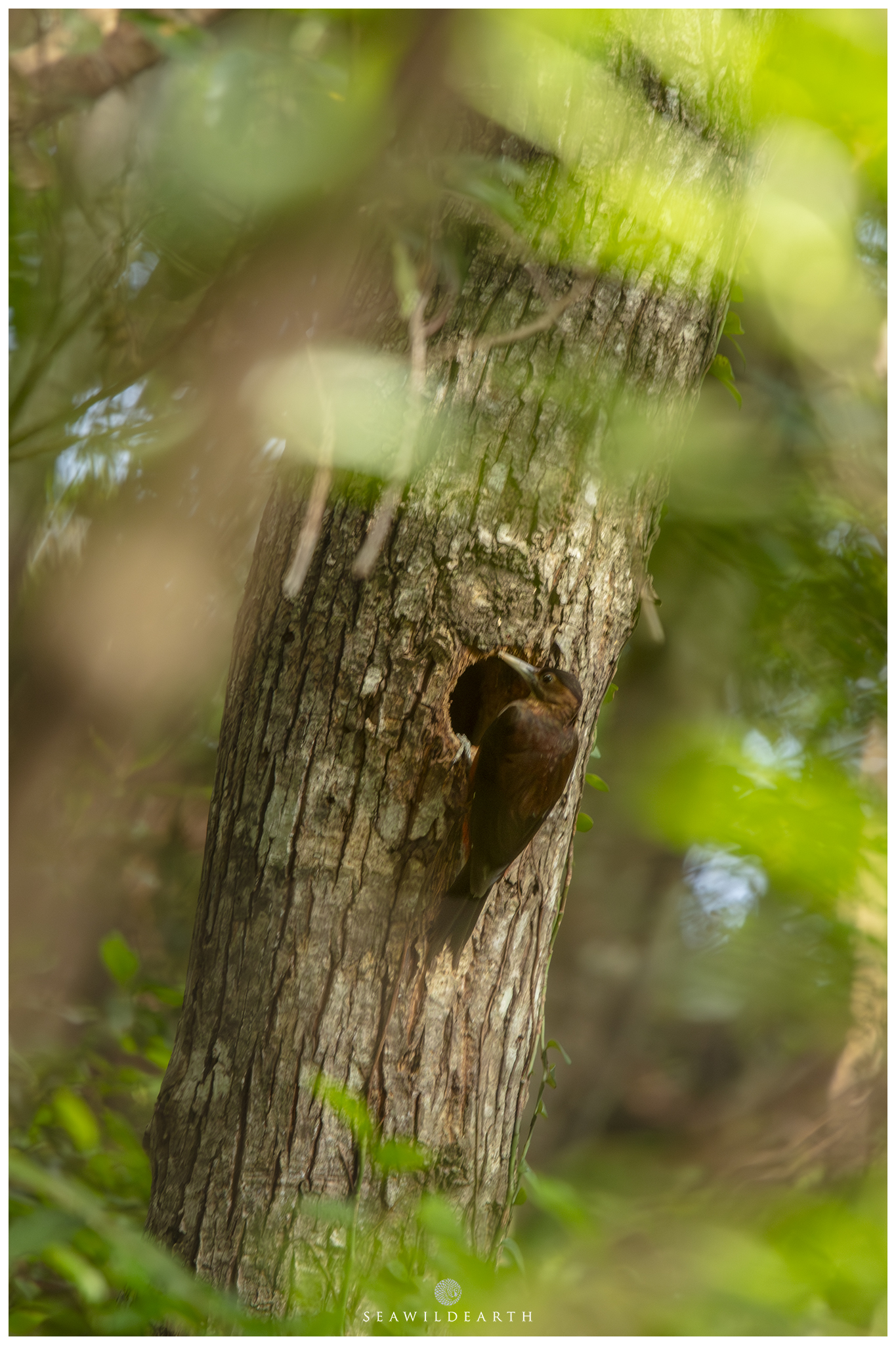
Frozen as if to say "Can't see me"...
Through holes in the vegetation I could see a dark 'shape' that simply looked 'off'. I'd been peering through this vegetation in the general area for around two hours and this 'shape' in one of the pine trees just called out to me. Squinting, "Is that a, beak?" More intense staring and then it came to me. I was looking at a female Okinawa woodpecker perched at the entrance to what looked like an under construction breeding roost. I was lost for words, for those who know me they would know how hard that would be. But right here, in front of me, one of the iconic species of the jungles here that have, for so long, eluded me.
Over the following two hours I had the incredible fortune to witness and photograph a pair of Okinawa Woodpeckers (Dendrocopos noguchii) actively excavating what appears to be a new nest site in the ancient forests of northern Okinawa — a sight that suggests the onset of the breeding season, which typically runs from late February through May. This isn’t just a rare bird sighting — it’s a glimpse into the life cycle of one of the rarest woodpecker species on Earth. Confined solely to the subtropical broad-leaved forests of the jungles of the Yambaru and existing nowhere else in the world, the Okinawa Woodpecker persists as a tiny, fragile population estimated at just under 600 individuals, with only a portion of those being mature, breeding adults.
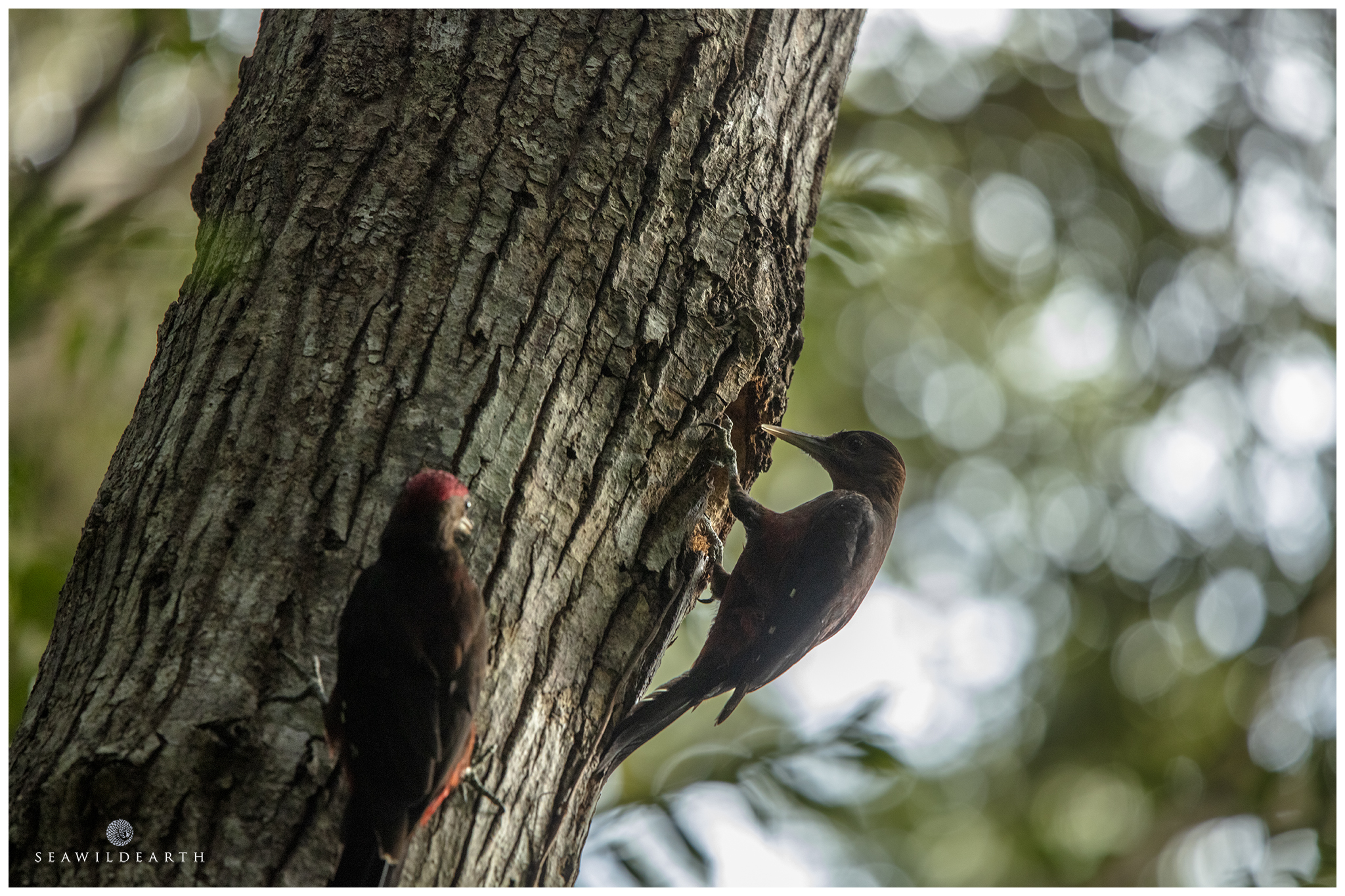
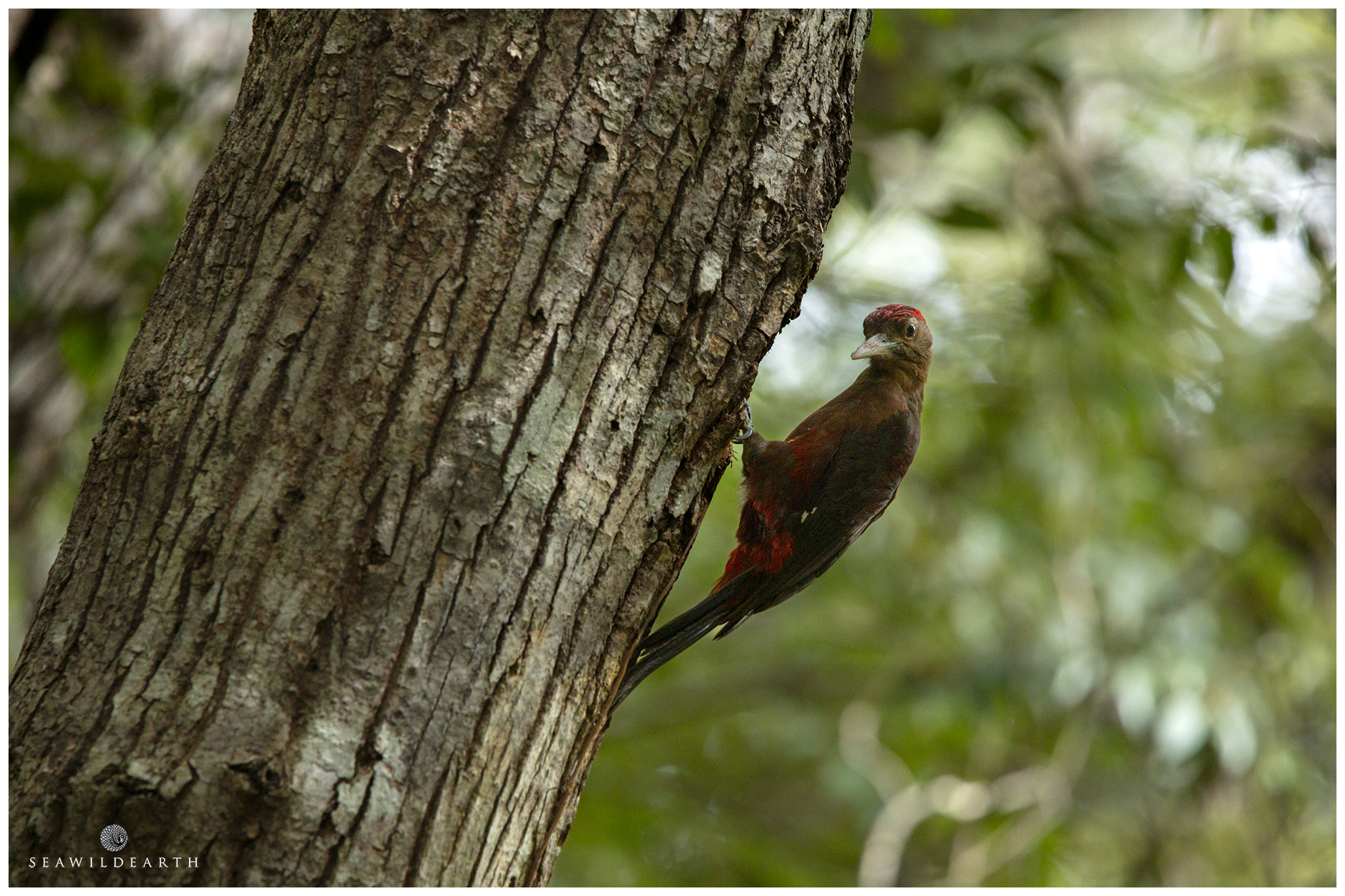
These woodpeckers are striking yet elusive: medium-sized and dark brown overall with reddish feather tips and white spots on their primary wing feathers. The male is distinguished by its dark red crown and nape, whereas the female, pictured left, bears a blackish-brown cap, both set against the richly patterned body — essential markers when observing or photographing this endangered species in the wild. Over the past days, watching this pair’s purposeful work has been a humbling reminder of the delicate balance these birds walk between thriving and merely surviving.
Out of deep respect for the conservation of this species and the future of the potential chicks that may emerge from this cavity, I will not be disclosing the precise location of this site. The success of the Okinawa Woodpecker existence revolves around a shrinking patch of old-growth forest, and exposing critical nest sites can subject them to disturbance at exactly the moment they are most sensitive, and vulnerable. Protecting such locations — especially during excavation and nesting — is essential to minimizing human impact and giving these birds the best chance possible to succeed this season.
Despite the precariousness of their situation, there remains hope: sightings like this underline that wild breeding pairs still persist and that with continued habitat protection and stewardship of Yambaru’s forests, there’s still a future for the remarkable species that is the Okinawa woodpecker. It’s a call to appreciate not just the beauty of the natural world, but the responsibility we have to guard it — because for species with such limited range and numbers, every breeding season truly matters. I will be making periodical visits to the site as the season progresses to hopefully witness the journey this couple embark on. One that I can only hope results in an expansion of the species population. Fingers crossed.
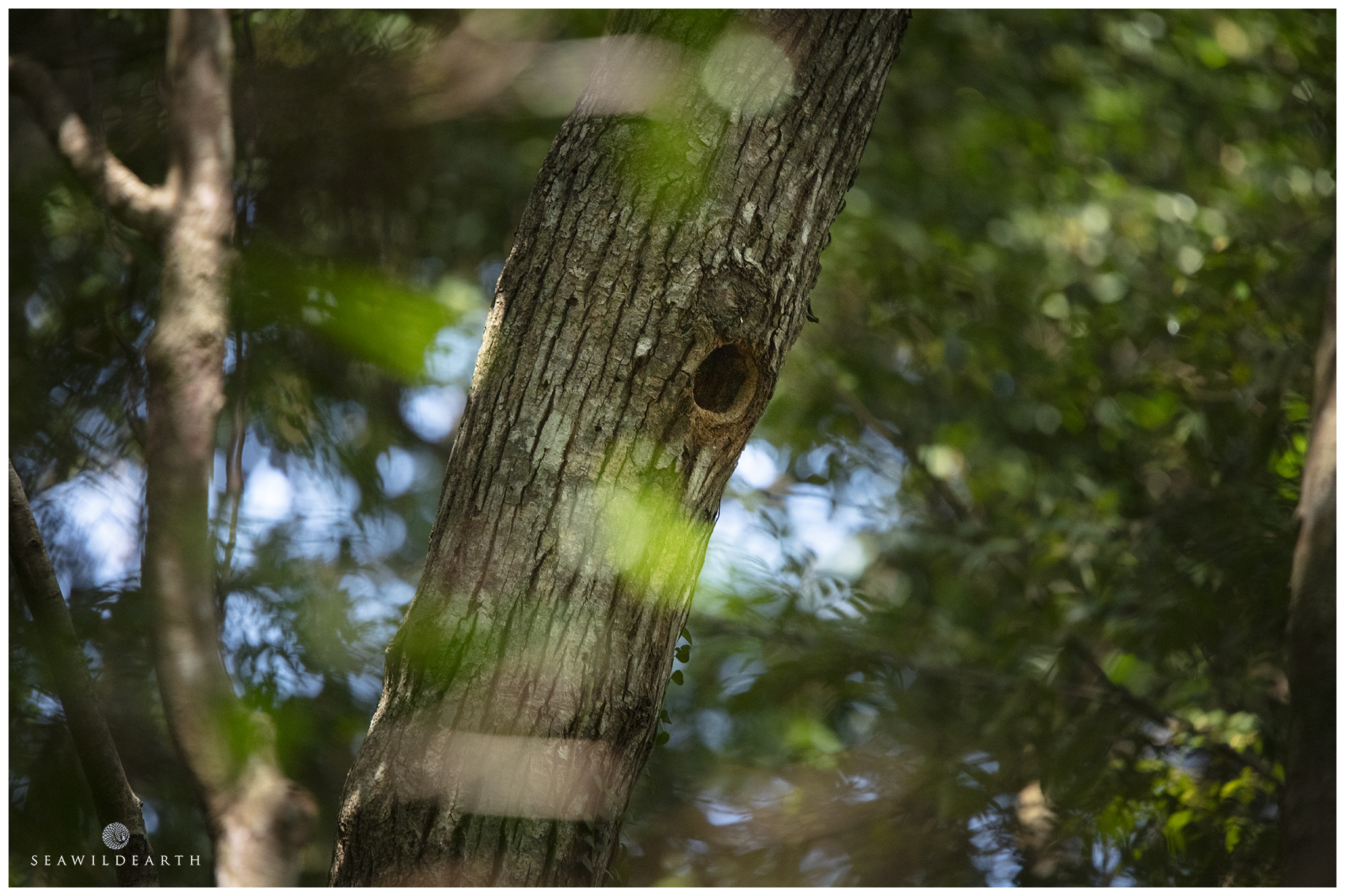
While this could have been an older nest the edges of the hole are fresh and much lighter than the main tree trunk which denotes newly exposed wood around the edges. Let's keep fingers crossed that this will be a successful breed.
The male and female can be seen in this image. It seems like the female is one one doing the hard work! The male, denoted by the red cap on its head watches on, no doubt sending positive reinforcement of the lady as she toils away.
After allowing the female some time in the nest prep the male took over and started going at it hammer and tongs. Below is a video clip showing his arrival, note the vocalizations between the two, and getting stuck into the task at hand.
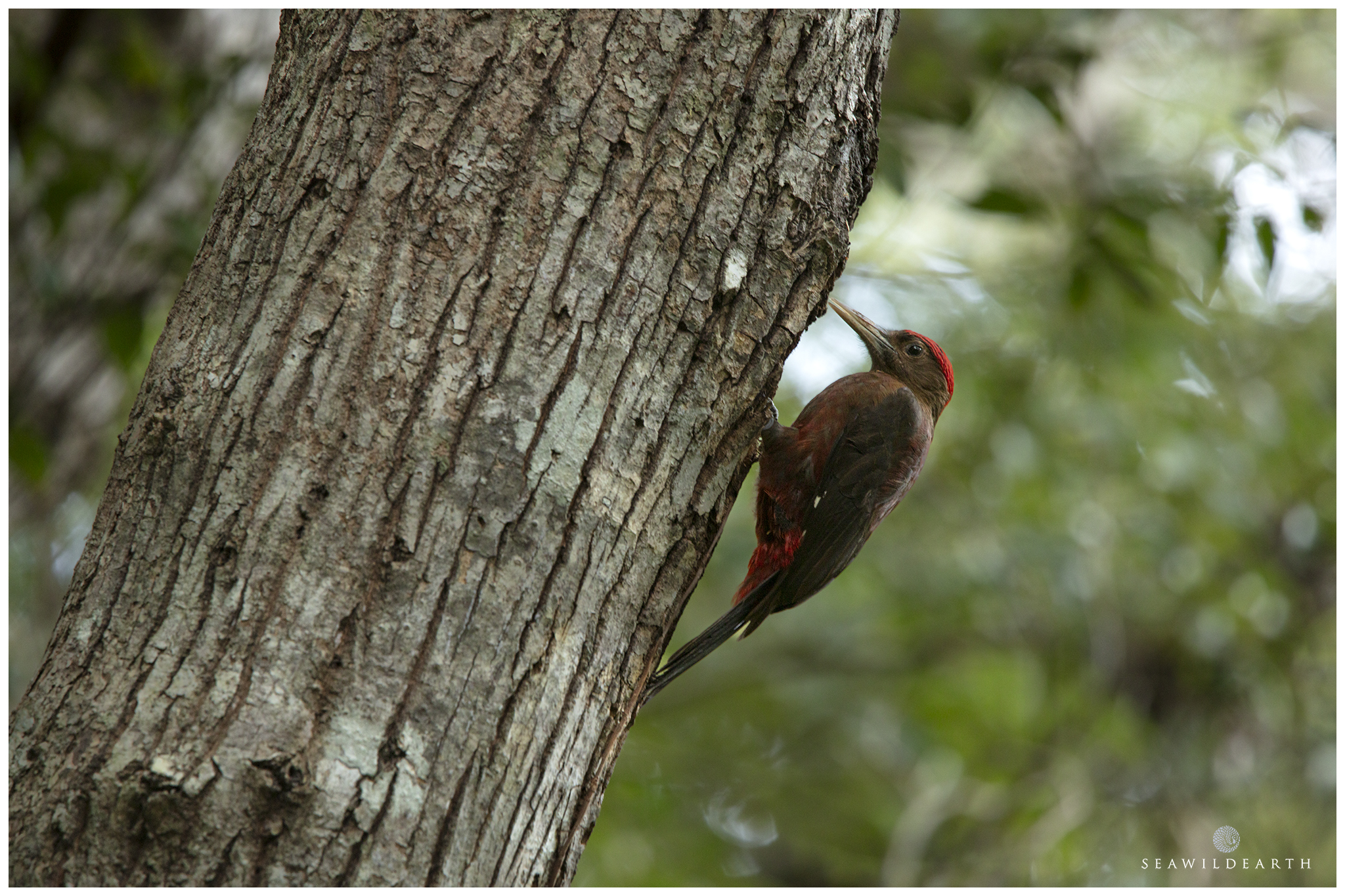
The longest session the male worked on the nest was some three and a half minutes in total. I'd been snapping away as diligently as the shutter would allow, when he nonchalantly took a moment, looked squarely at me, and carried on.
Your Guide to the Jungles of the Yambaru
Ever wondered what it would be like to witness the incredible wildlife of northern Okinawa? Use the contact page to reach out and let's get that adventure set up.

Photographer / Cameraman
Mark Thorpe
Emmy Award Winning wildlife cameraman and Internationally published landscape photographer Mark Thorpe has been an adventurer since he could walk! Spending 17yrs as an Underwater Cameraman at the start of his imaging career the highlight of which was being contracted to work with National Geographic. In that role as a field producer and predominantly underwater cameraman he's been privy to a mixed bag of hair raising adventures. For some reason he was always selected for projects relating to large toothed marine predators such as Great White and Tiger Sharks, Sperm Whales, and Fur Seals. Additionally he has also been active within Southern Africa on terrestrial projects dealing with a wide array of iconic wildlife.
Currently based in Okinawa, Japan, he has established himself there as the leading ocean, wildlife and landscape photographer. Always on the lookout for that next big adventure he has travelled extensively throughout the islands of Okinawa to document their beauty and natural history. He shares his exploits online with a totally organic social audience. Videography wise he continues to create short form content to promote the diversity of wildlife within the Okinawa prefecture.
Mark also plans, offers and guides completely bespoke wildlife experiences for private sector clientele. Whether you're a photographer looking to document the behavior of a specific species or indeed a nature loving couple/individual looking to that totally immersive and all encompassing experience. From single multiple hour options through to multiple day experiences trips and experiences are created with the view to witnessing the truly wild spectacle that Okinawa offers without being treated, or seen, as just another visitor to the island. Should you wish to experience this truly awesome side of wild Okinawa then all you have to do to get the ball rolling is click on the Contact page and fire off any questions you may have about the currently available adventures.