
Okinawa Woodpecker
Finding and photographing one of the rarest birds on that planet. Often just a fleeting glimpse and faint echoes of its singular 'chirp' vocalizations are all most people see and hear of this species. Unless one knows their routine.
Okinawa Woodpecker, in search for the illusive.
Okinawa Woodpecker is one of the rarest and most remarkable birds in Japan, found only in the subtropical forests of Yambaru Jungles of northern Okinawa. Also known as Pryer’s Woodpecker, the Okinawa Woodpecker is an endemic species that has become a symbol of the island’s fragile biodiversity. With fewer than 600 individuals believed to remain, the Okinawa Woodpecker continues to rely on the protection of old-growth forest habitat and ongoing conservation work to secure its future. For birdwatchers and wildlife enthusiasts, seeing this avian superstar in its natural habitat is considered one of Okinawa’s greatest wildlife experiences.
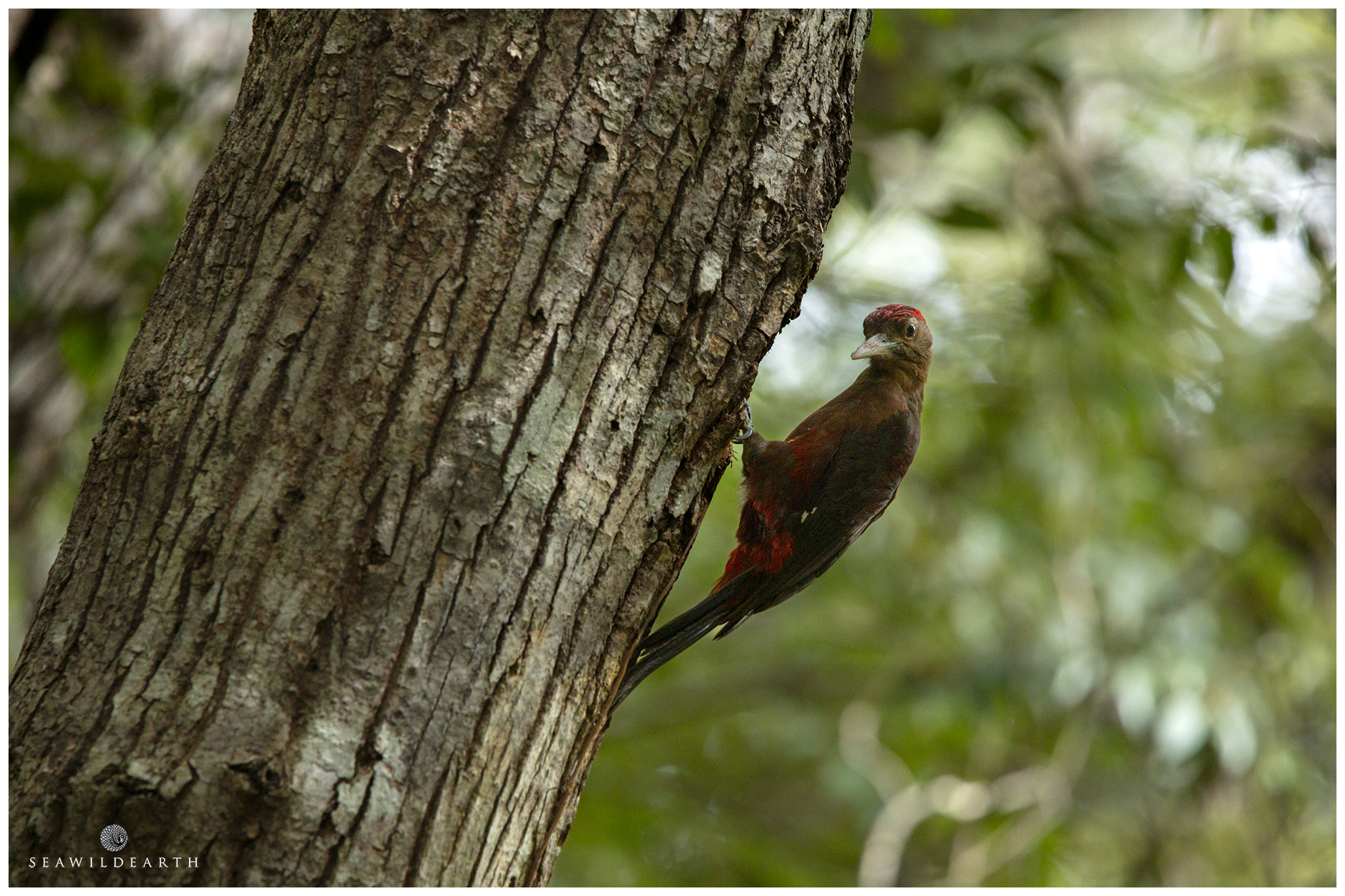
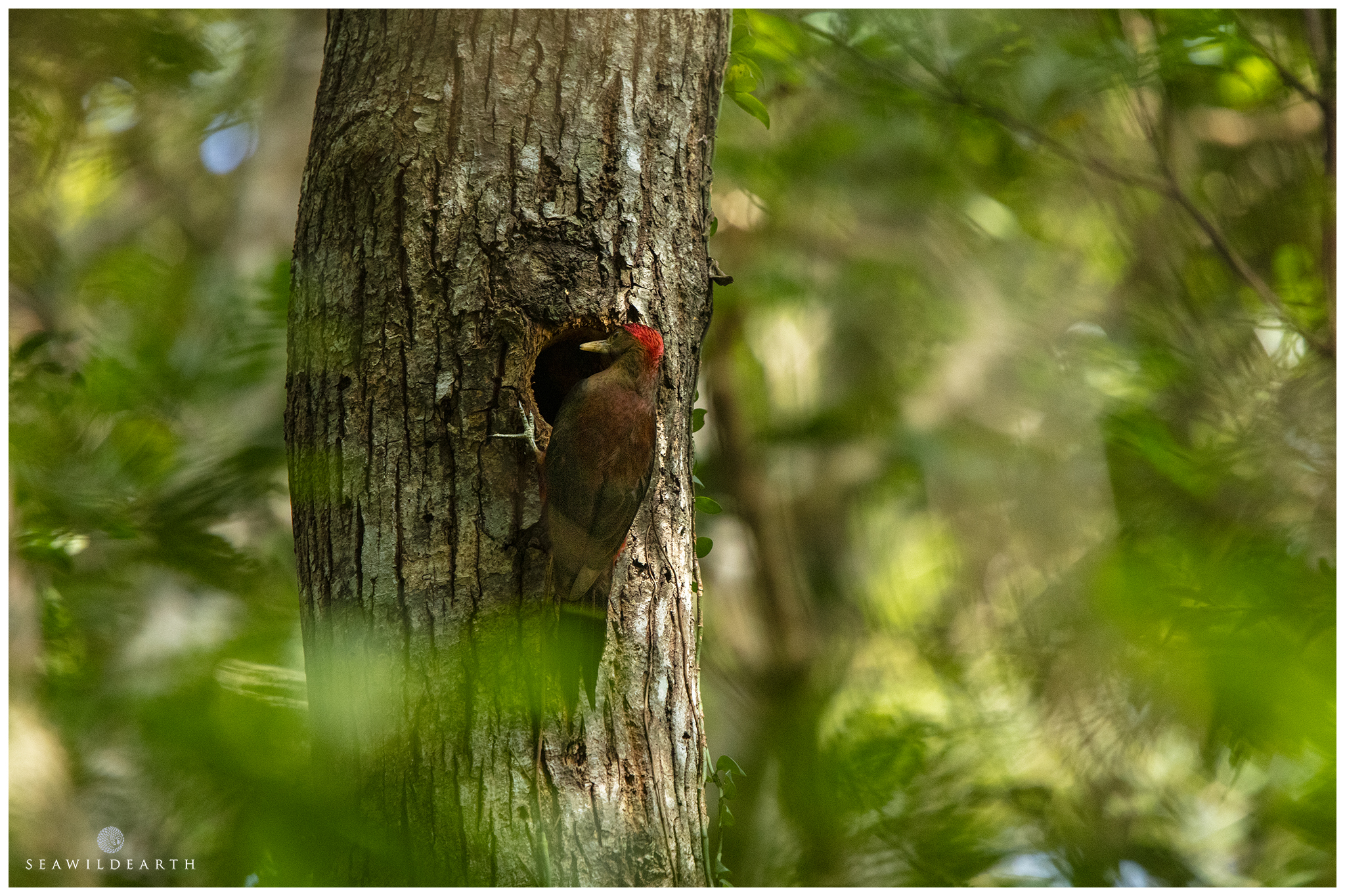
The striking red plumage of the Male of the species makes him instantly recognizable.
The Okinawa Woodpecker is instantly recognisable by its rich dark brown plumage, pale speckled wings, and vivid crimson crown. Male Okinawa Woodpeckers usually show more extensive red on the head and nape, while females often have darker tones with less red coloration. Juvenile Okinawa Woodpeckers can appear brighter around the crown before gradually moulting into adult plumage. Larger than many related woodpecker species, the Okinawa Woodpecker uses its powerful bill to excavate bark and decaying timber in search of beetle larvae, spiders, and other invertebrates hidden within the forest.
The breeding season of the Okinawa Woodpecker generally begins in late February and continues through May, when pairs become highly territorial and vocal. During this period, the Okinawa Woodpecker excavates nest cavities in mature native trees, particularly older Castanopsis and oak species. Eggs are most often laid during March and April, with chicks remaining in the nest for approximately four to six weeks before fledging. Young Okinawa Woodpeckers may continue to follow and learn from the adults after leaving the nest, gradually developing the skills needed to forage independently in the dense Yambaru forest.
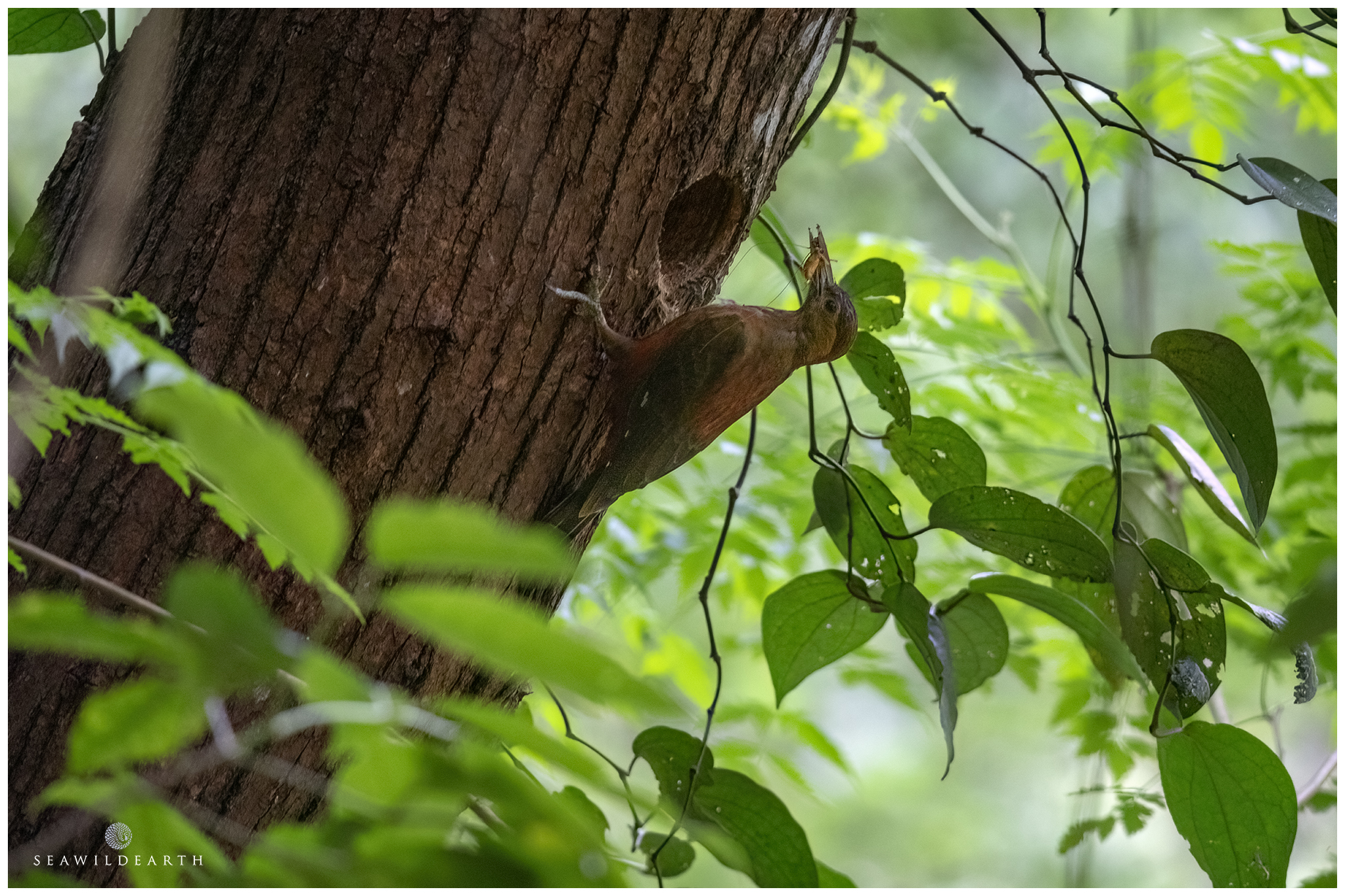
A female Okinawa Woodpecker, note the brownish colored cap as opposed to the red for the male, delivers sustenance to her young.
Across the seasons, the Okinawa Woodpecker follows a distinct annual rhythm. Spring is the easiest time to hear the Okinawa Woodpecker, as drumming and sharp calls echo through the forest during courtship and nesting. In summer, adult birds focus on feeding fledglings, while autumn and winter bring quieter foraging activity as the Okinawa Woodpecker searches tree trunks and fallen wood for prey. The latest population surveys suggest the global population remains under 600 birds, making every sighting of the Okinawa Woodpecker a privilege and a reminder of how important Yambaru’s protected forests are to the survival of this extraordinary species.
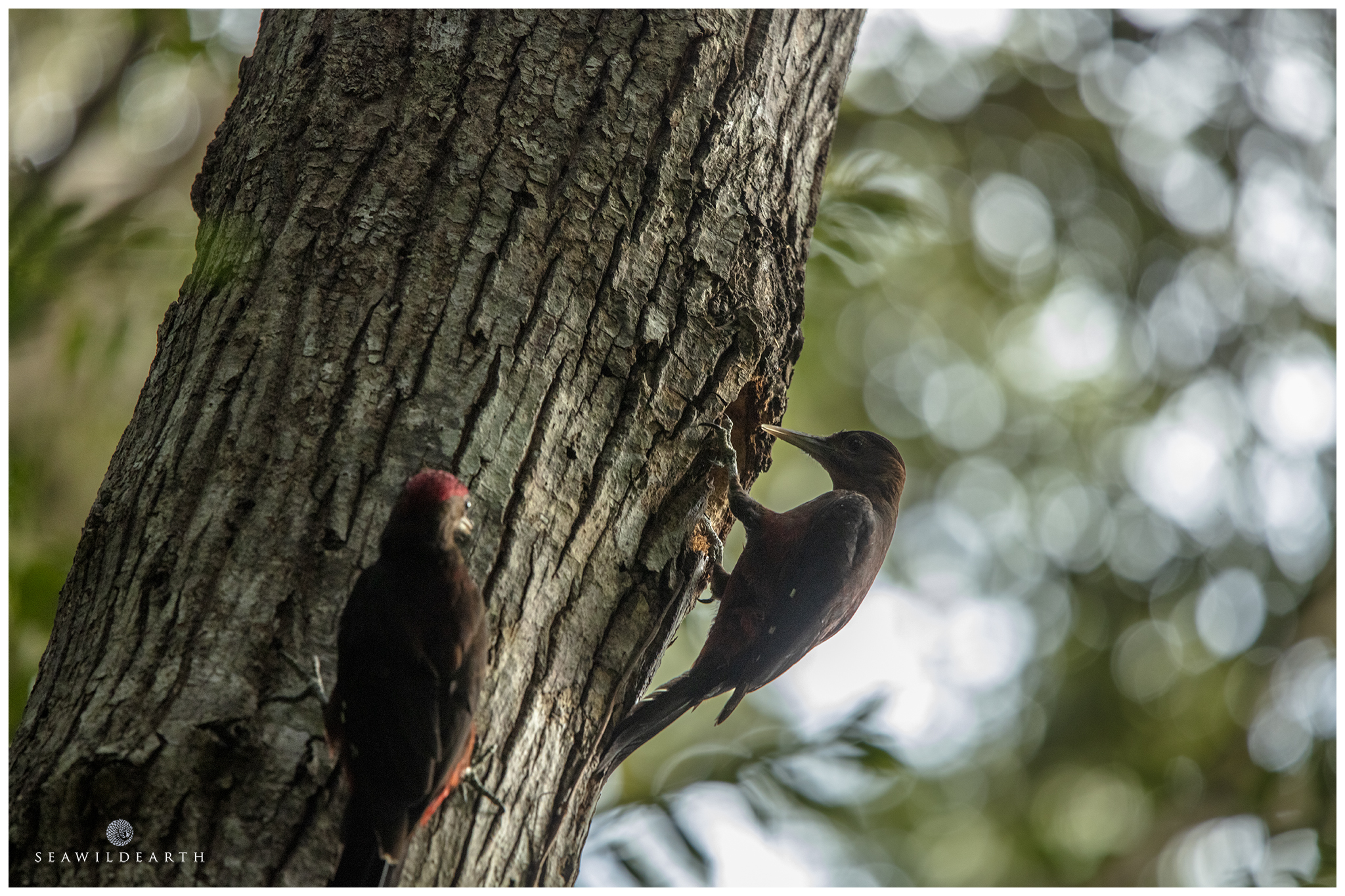
Towards the end of February the Okinawa Woodpecker will start their pairing process. This can lead to some pretty frenetic activity as males vie for the 'wing' of their chosen mate. Once paired they commence with the excavating of potential nest sites.
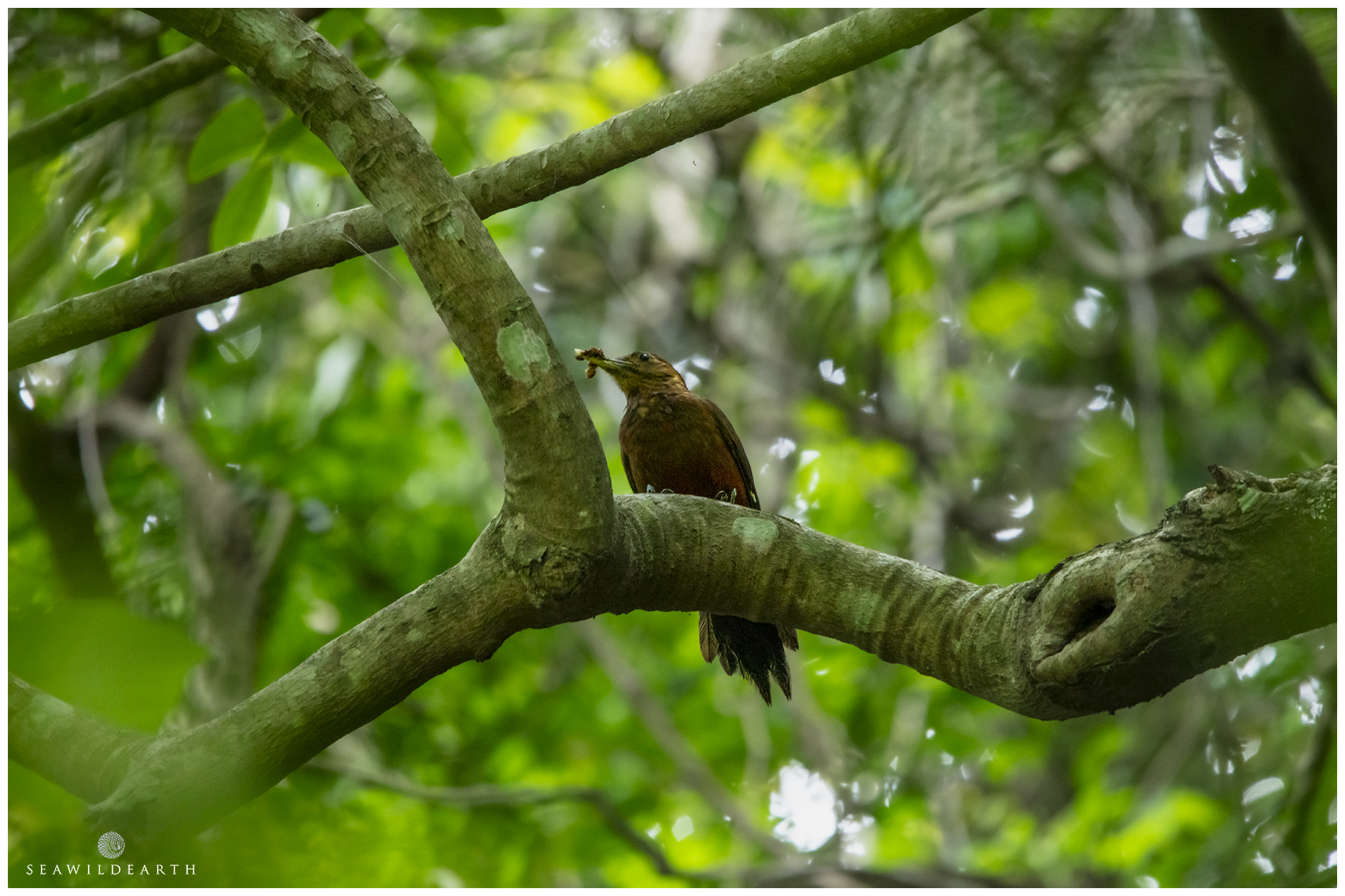
Whether by peeling off tree bark to find hidden bugs or sifting through leaf litter on the jungle floor, both male and female will scour their 'patch' looking for all forms of sustenance for their growing offspring. It's a never ending process to feed 'junior'.
With an estimated 600 individuals remaining in the wilds of the Yambaru Jungles threats to their stem from habitat destruction and human encroachment. From within the natural world also, Crows will take chicks at any stage of their development.
About the Author
Internationally recognized as a provider of quality mixed media Mark Thorpe is always on the search for captivating imagery.

Photographer / Cameraman
Mark Thorpe
Emmy Award Winning wildlife cameraman and Internationally published landscape photographer Mark Thorpe has been an adventurer since he could walk! Spending 17yrs as an Underwater Cameraman at the start of his imaging career the highlight of which was being contracted to work with National Geographic. In that role as a field producer and predominantly underwater cameraman he's been privy to a mixed bag of hair raising adventures. For some reason he was always selected for projects relating to large toothed marine predators such as Great White and Tiger Sharks, Sperm Whales, and Fur Seals. Additionally he has also been active within Southern Africa on terrestrial projects dealing with a wide array of iconic wildlife.
Currently based in Okinawa, Japan, he has established himself there as the leading ocean, wildlife and landscape photographer. Always on the lookout for that next big adventure he has travelled extensively throughout the islands of Okinawa to document their beauty and natural history. He shares his exploits online with a totally organic social audience. Videography wise he continues to create short form content to promote the diversity of wildlife within the Okinawa prefecture.
Mark also plans, offers and guides completely bespoke wildlife experiences for private sector clientele. Whether you're a photographer looking to document the behavior of a specific species or indeed a nature loving couple/individual looking to that totally immersive and all encompassing experience. From single multiple hour options through to multiple day experiences trips and experiences are created with the view to witnessing the truly wild spectacle that Okinawa offers without being treated, or seen, as just another visitor to the island. Should you wish to experience this truly awesome side of wild Okinawa then all you have to do to get the ball rolling is click on the Contact page and fire off any questions you may have about the currently available adventures.